
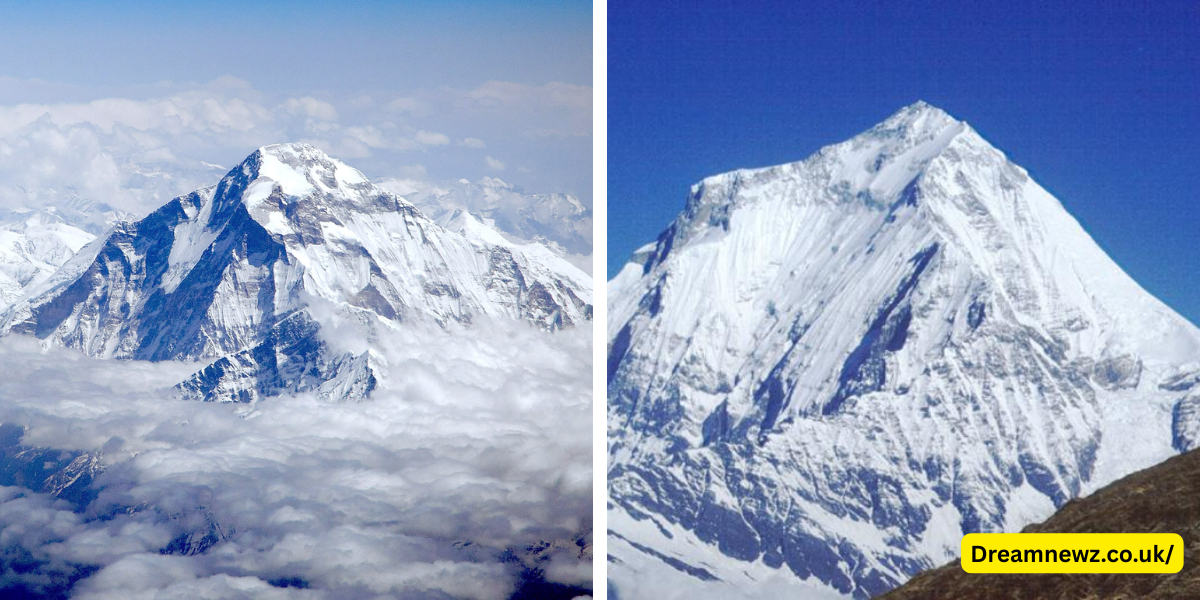
The internet rarely agrees on anything. Yet over the past few weeks, one question has pulled climbers, scientists, and everyday readers in the UK into the same scrolling frenzy: what is the real mountain drailegirut height? It sounds niche, even obscure. But the story behind it is emotional, controversial, and unexpectedly human. One set of numbers sparked global debate, viral maps, and late-night arguments across social media. And suddenly, a mountain few people had heard of is challenging what we think we know about geography, data, and truth itself.
Why This Mountain Is Suddenly Everywhere
The surge of interest around the mountain drailegirut height did not begin in a laboratory or on a summit. It started online. A short clip comparing conflicting elevation figures gained traction, first among hiking forums and then across mainstream platforms. Within days, UK news feeds were filled with questions, theories, and dramatic claims. Some posts suggested the mountain had been mismeasured for decades. Others argued climate shifts had physically altered its elevation. The uncertainty became irresistible, especially in an era obsessed with data accuracy.
What turned curiosity into a trend was emotion. People were not just debating numbers; they were defending trust in science, technology, and even national mapping agencies. For British audiences, the story tapped into a familiar fascination with exploration and discovery. The idea that a single peak could still hold secrets felt thrilling. It reminded readers that even in a satellite-mapped world, nature can surprise us, and certainty is sometimes an illusion.
What We Know About the Height Debate So Far
At the centre of the storm is the disputed mountain drailegirut height, which varies depending on the source. Some topographic datasets list one figure, while recent satellite mapping suggests another, differing by tens of metres. That gap may sound small, but in alpine research, it is significant. Height determines ranking, climate classification, and even conservation priorities. When numbers clash, the implications ripple outward, affecting everything from academic papers to tourism brochures.
Experts caution against rushing to conclusions. Elevation debate is not new. Mountains have been remeasured throughout history as tools improved. GPS surveys, radar imaging, and satellite mapping each use different reference models. A spokesperson from a UK-based geographic society recently noted that “topographic data is only as stable as the methods behind it.” In other words, the mountain may not have changed, but our ability to measure it certainly has.
How Technology Is Rewriting Old Measurements
Modern tools are both the hero and the villain of this story. Advances in satellite mapping and GPS surveys allow scientists to measure peaks with unprecedented precision. However, they also expose inconsistencies in older records. In the case of the mountain drailegirut height, new digital elevation models revealed discrepancies that had gone unnoticed for years. Once published online, those figures spread faster than any formal review process could keep up with.
For UK researchers, this moment highlights a broader shift in how science reaches the public. Data is no longer locked behind journals. It is shared, debated, and sometimes distorted in real time. While this openness fuels innovation, it also creates confusion. Experts stress that confirming a mountain’s true height requires repeated measurements, ground verification, and peer review. Technology opens the door, but patience is still essential.
Why the UK Is Paying Such Close Attention
So why has this story resonated so strongly in the United Kingdom? Part of the answer lies in culture. Britain has a long tradition of explorers, surveyors, and mapmakers. From early ordnance surveys to modern alpine research, measurement has always mattered. The debate over the mountain drailegirut height feels like a modern extension of that legacy, played out on digital platforms instead of parchment maps.
There is also a media angle. Trending news thrives on uncertainty and resolution. UK audiences, already engaged by climate discussions and environmental change, see this as more than trivia. It raises questions about how landscapes respond to natural forces and human interpretation. As one UK columnist put it, “If we can still argue about a mountain’s height, what else do we think we know for sure?”
Environmental and Cultural Stakes Behind the Numbers
Beyond headlines, the debate has real-world consequences. A confirmed change in the mountain drailegirut height could influence climate impact studies, especially those tracking glacial retreat and erosion. Even if the mountain itself has not grown or shrunk, the renewed scrutiny draws attention to fragile alpine ecosystems. Conservation groups argue that public interest can be leveraged to protect these regions before tourism pressure increases.
Culturally, the mountain has gained symbolic weight. Online communities have adopted it as a case study in humility, a reminder that nature does not conform neatly to spreadsheets. For younger audiences in the UK, the story blends education with intrigue. It shows that geography is not static. It evolves as our tools, perspectives, and priorities change.
What Happens Next and Why It Matters
The next phase will be slower and quieter, but no less important. International teams are reportedly planning coordinated GPS surveys to establish a widely accepted figure for the mountain drailegirut height. These efforts may take months, even years. When results arrive, they will likely settle the debate, but they may also spark new questions about other peaks and their recorded elevations.
For now, the mountain stands as a trending symbol of our data-driven age. It proves that even a single number can ignite global conversation when curiosity meets technology. Readers in the UK have a front-row seat to a modern scientific story unfolding in real time. Stay engaged, follow credible updates, and question what you see. If this story grabbed your attention, share it, discuss it, and keep exploring, because the world still has heights worth discovering.
You may also read