
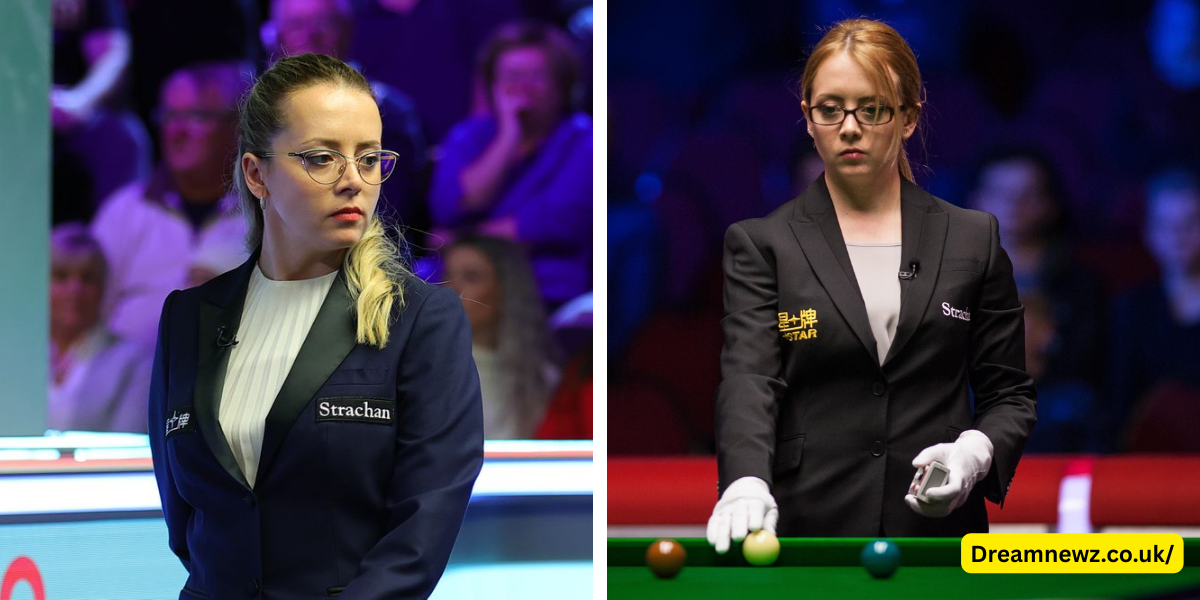
The hush before a break-off. The click of balls. The referee’s calm voice cutting through the Crucible Theatre’s tension. In recent months, something has quietly changed on British snooker tables — and fans are noticing. The spotlight is no longer only on champions and century breaks. It is also on the women standing confidently at the centre of the game, making split-second decisions under global scrutiny. From trending broadcasts to viral clips, female snooker referees are reshaping how the sport looks, sounds, and feels in the United Kingdom.
Their rise is not loud. It is powerful. And it is rewriting snooker’s story in real time.
Why Female Snooker Referees Are Suddenly Everywhere
Turn on a major tournament in the UK today and the presence is unmistakable. More female snooker referees are officiating high-stakes matches than ever before, from ranking events to Triple Crown tournaments. Viewers are noticing not because of novelty, but because professionalism has become the norm. These referees control the table with authority, precision, and composure that matches the sport’s elite standards. Social media clips and fan discussions reflect a growing respect rather than surprise.
This surge is no accident. Governing bodies have invested in training, mentorship, and visibility across the World Snooker Tour. Broadcasters have also played a role, giving equal screen time and commentary respect. In a traditionally male-dominated sport, the UK audience is witnessing a natural evolution rather than forced change, and that authenticity is driving attention across Google Discover and sports news platforms.
Breaking Barriers in a Traditionally Male-Dominated Sport
For decades, snooker officiating in Britain followed an unspoken pattern. Men dominated centre-stage roles while women were often confined to lower-tier events. That pattern has now cracked. Today’s female snooker referees are not exceptions; they are part of the system. Their journey, however, has not been easy. Many trained quietly for years, officiating grassroots matches, absorbing criticism, and proving consistency before being trusted with televised frames.
What makes this shift significant is timing. As UK sport embraces broader diversity and inclusion conversations, snooker is keeping pace. Fans are responding positively because the change feels earned. These referees know the rules, command the room, and manage pressure with calm authority. In doing so, they are not just breaking barriers — they are removing them entirely for the next generation of officials.
Familiar Faces Leading the Change in the UK
Several well-known figures have become synonymous with this movement. Names like Desislava Bozhilova and Tatiana Woollaston frequently trend during major tournaments, sparking conversation across British sports media. Their consistency, confidence, and fairness have built trust among players and fans alike. When tense frames reach a climax, their presence reassures everyone at the table.
The rise of female snooker referees has also humanised officiating. Interviews, behind-the-scenes features, and social media exposure allow fans to understand the preparation behind each match. These women study rulebooks, practise positioning, and manage intense psychological pressure. In the UK, where snooker culture values tradition and precision, this professionalism has helped accelerate acceptance and admiration.
How Players and Fans Are Responding
Perhaps the clearest indicator of success is player reaction. Top professionals now speak openly about how referees are judged purely on performance, not gender. Respect at the table is earned, and today’s female snooker referees have earned it repeatedly. Calm handling of disputes, clear communication, and flawless control of match flow have silenced earlier scepticism.
Fans, too, have evolved. Online forums and comment sections increasingly focus on decision-making quality rather than appearance. This shift matters. It shows that British snooker audiences are embracing progress without losing respect for tradition. The referee is once again seen as a vital guardian of the sport, regardless of gender, and that cultural acceptance is key to long-term change.
The Role of Broadcasters and the World Snooker Tour
Television exposure has played a crucial role in this trend. Major UK broadcasters now feature female snooker referees across prime-time slots, without framing their presence as unusual. This normalisation is powerful. Young viewers see women officiating elite matches and register it as standard, not symbolic. That subtle shift is reshaping how the sport is perceived nationwide.
The World Snooker Tour has also modernised recruitment and assessment processes. Clear pathways, equal evaluation standards, and international opportunities have encouraged more women to pursue refereeing seriously. By focusing on merit and consistency, the organisation has allowed talent to rise naturally. The result is a more diverse, professional officiating pool that strengthens the credibility of the sport in the UK and beyond.
Why This Trend Matters Beyond the Snooker Table
The growing visibility of female snooker referees reflects a broader change in British sport culture. Representation matters, especially in roles associated with authority and expertise. When audiences see women confidently controlling elite competitions, it challenges outdated assumptions and expands what leadership looks like in sport. Snooker, often viewed as traditional and conservative, is quietly becoming a symbol of measured progress.
This shift also influences participation. Grassroots clubs across the UK report increased interest from young women exploring officiating courses. They see real opportunities rather than distant dreams. Over time, this could lead to deeper talent pools, higher officiating standards, and a stronger domestic structure. The impact extends far beyond televised matches, shaping the future of the sport at every level.
Stats, Momentum, and What the Numbers Suggest
Recent tournament data shows a steady increase in female officials assigned to ranking events, particularly in the UK calendar. While exact percentages vary by season, insiders confirm that appointments have doubled compared to a decade ago. That momentum is visible during flagship events where female snooker referees now regularly oversee decisive frames under intense pressure.
Audience engagement metrics also tell a story. Clips featuring calm officiating moments frequently trend on social platforms, attracting positive commentary. This visibility reinforces trust and familiarity. In a sport where credibility is everything, numbers suggest that inclusion is not weakening snooker’s image — it is strengthening it.
The Future of Female Snooker Referees in the UK
Looking ahead, the trajectory appears clear. More training programmes, broader media exposure, and evolving fan attitudes suggest that female snooker referees will soon be an unquestioned part of the sport’s fabric. The next five years could see women officiating finals as routinely as early-round matches, further embedding equality through consistency rather than headlines.
The real milestone will come when the conversation fades — when presence is no longer newsworthy because it is expected. Until then, each tournament adds another chapter to this evolving story. British snooker is not abandoning tradition. It is refining it. And at the heart of that refinement stand skilled, composed referees who happen to be women.
The change is happening now. Stay tuned, stay informed, and follow how female snooker referees continue to redefine the game’s future across the United Kingdom.
You may also read