
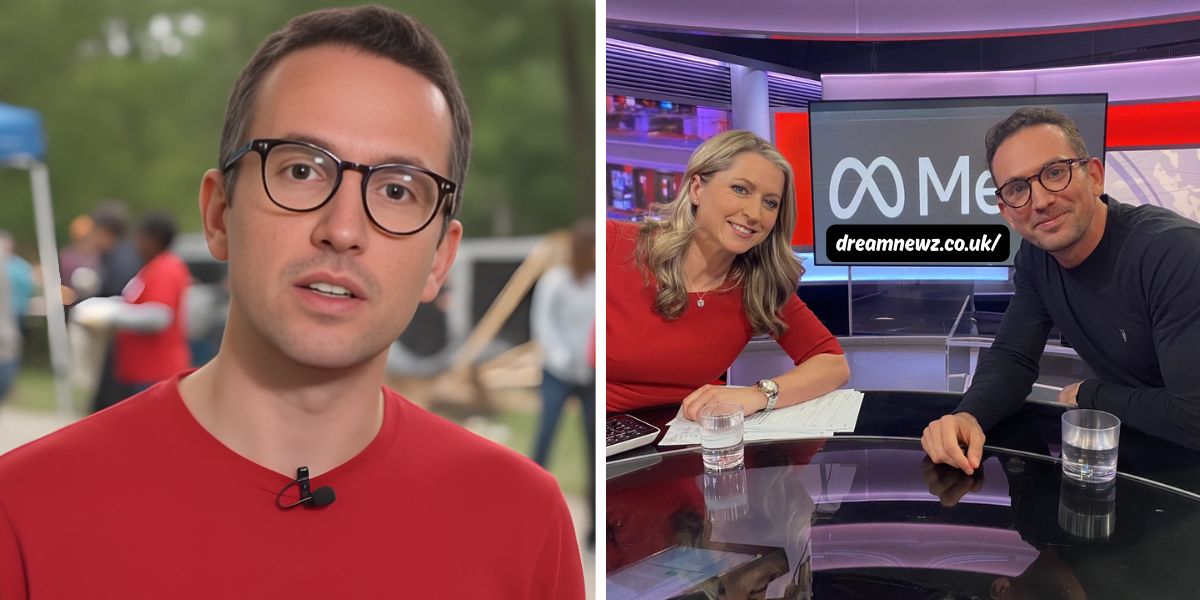
The moment Hugo Bachega accent begins to speak, many viewers in the United Kingdom lean closer to their screens. His calm delivery, sharp reporting, and unmistakable voice trigger curiosity before a single fact lands. In recent weeks, one unexpected detail has dominated social media timelines and comment sections: The Hugo Bachega accent. Why does it sound different? Where is it from? And why are so many people talking about it now? What began as casual curiosity has quickly turned into a wider cultural conversation across Britain.
Why the Hugo Bachega Accent Is Suddenly Trending in the UK
The Hugo Bachega accent did not trend overnight by accident. It rose alongside a surge in viewership for international news, particularly during moments of global tension. As audiences turned to trusted broadcasters for clarity, Hugo Bachega’s reporting stood out. His voice, precise yet distinct, sparked discussion across X, Reddit, and TikTok, where short clips of his reports gained thousands of interactions within hours.
Many UK viewers are accustomed to traditional BBC accents shaped by decades of broadcasting norms. When a voice deviates from that expectation, it naturally draws attention. The Hugo Bachega accent feels international, polished, and modern at the same time. That contrast has fueled debate, with some praising its clarity and others simply trying to place its origin. In the age of viral media, even a voice can become headline news.
Who Is Hugo Bachega and Where Does His Accent Come From
Hugo Bachega is a respected BBC correspondent known for reporting on some of the world’s most complex stories. Born in Brazil and educated across different countries, his background explains much of what audiences hear today. The Hugo Bachega accent reflects a global upbringing shaped by multilingual environments rather than a single national identity.
Unlike traditional regional British accents, his speech carries subtle international influences. Linguists often describe this as a “global English” accent, increasingly common among journalists working across continents. For many viewers in the United Kingdom, this makes his reporting feel both authoritative and relatable. It also reflects the reality of modern journalism, where borders are crossed daily and voices are shaped by lived experience, not geography alone.
Social Media Reactions to the Hugo Bachega Accent
Online reactions to the Hugo Bachega accent have ranged from admiration to pure curiosity. On X, users ask direct questions about his background, while others praise how easy he is to understand compared to stronger regional dialects. Short video clips shared on TikTok have amplified the discussion, often focusing more on his voice than the news itself.
What is notable is the tone of most reactions. Unlike past debates around accents on British television, this one feels largely positive. Many commenters say the accent sounds “neutral,” “calm,” and “professional.” Some even argue it enhances trust in his reporting. In a digital media landscape often driven by controversy, the largely respectful nature of this debate stands out and signals a shift in audience attitudes.
Accent Bias and British Broadcasting Standards
For decades, British television followed unspoken rules about how news presenters should sound. Received Pronunciation dominated screens, shaping public expectations of credibility. The rise of the Hugo Bachega accent into mainstream visibility challenges those long-standing norms in subtle but important ways.
Media experts note that accents once considered “non-standard” are now more common on UK television. This change reflects a broader effort toward inclusivity and authenticity. Hugo Bachega’s success suggests that audiences care more about accuracy and insight than accent conformity. His presence signals that British broadcasting is slowly evolving, acknowledging that authority does not belong to one voice type alone.
Why Viewers Find the Hugo Bachega Accent So Memorable
There is a psychological reason the Hugo Bachega accent sticks with viewers. Studies show that unfamiliar but clear accents activate attention and improve information retention. In simple terms, people listen more closely when something sounds slightly different but remains easy to understand.
Bachega’s speech rhythm, careful pronunciation, and measured pace create that effect. For mobile-first audiences scrolling through news clips, his voice often stops the scroll. This memorability is a powerful asset in the Google Discover era, where engagement depends on instant connection. It also explains why so many viewers remember his reports long after the broadcast ends.
The Role of Global Journalists in Modern UK Newsrooms
The rise of the Hugo Bachega accent highlights a larger trend within British media. UK newsrooms are increasingly staffed by journalists with international backgrounds. This diversity brings new perspectives and, naturally, new voices to the screen.
Audiences are responding positively. According to recent media surveys, younger UK viewers are more likely to trust journalists who reflect a global outlook. They see international accents as signs of real-world experience rather than outsiders. Hugo Bachega fits perfectly into this shift, representing a generation of correspondents shaped by global events rather than national borders.
Comparing Hugo Bachega’s Accent to Other BBC Voices
Comparisons are inevitable. Viewers often contrast the Hugo Bachega accent with traditional BBC presenters or other international correspondents. Unlike strong regional British accents or heavy American inflections, his voice occupies a middle ground that feels accessible to a wide audience.
This balance may explain why his reports perform well across platforms. Media analysts point out that neutral international accents tend to travel better online, especially on global platforms like YouTube and TikTok. For the BBC, this is not just a stylistic detail but a strategic advantage in reaching international audiences without losing UK viewers.
What the Hugo Bachega Accent Says About Multicultural Britain
Beyond journalism, the Hugo Bachega accent has become a symbol of modern Britain itself. The UK is more linguistically diverse than ever, with millions of residents speaking English as a second or third language. Accents are no longer markers of belonging or exclusion; they are everyday realities.
Public response to Bachega reflects this shift. Instead of questioning his credibility, most viewers focus on his reporting skills. This suggests growing acceptance and even appreciation of linguistic diversity on national television. In that sense, his voice tells a story not just about journalism, but about cultural change in the United Kingdom.
Data, Trends, and Audience Engagement Around the Accent
Engagement metrics tell a clear story. Clips featuring Hugo Bachega have seen higher-than-average completion rates on social platforms, according to publicly visible analytics. Searches related to the Hugo Bachega accent have spiked in the UK over recent months, indicating sustained interest rather than a fleeting trend.
Experts predict this curiosity will continue as audiences become more voice-aware in digital media. Podcasts, short-form videos, and live streams all place heavy emphasis on sound. A distinctive yet clear accent becomes part of a journalist’s brand. In this environment, Bachega’s voice is not just noticed; it is an asset.
Future Predictions: Will Accent Debates Shape UK Media?
Looking ahead, the conversation around the Hugo Bachega accent may influence hiring and presentation choices across British media. As broadcasters compete for attention in crowded digital spaces, authenticity and individuality are becoming more valuable than uniformity.
Industry insiders suggest that future presenters will be selected less for how closely they match traditional standards and more for how well they connect with diverse audiences. If current trends continue, voices like Bachega’s will become the norm rather than the exception. This could mark a defining moment in the evolution of UK broadcasting culture.
Why the Hugo Bachega Accent Matters More Than You Think
At first glance, discussing an accent may seem trivial. Yet the widespread interest in the Hugo Bachega accent reveals deeper questions about identity, trust, and representation in the media. It shows how audiences are redefining what authority sounds like in a globalised world.
As British viewers continue to engage with international news, voices like Hugo Bachega’s will shape how stories are received and remembered. If you have noticed his accent, reacted to it, or shared a clip online, you are already part of a larger cultural shift. Stay curious, follow the conversation, and pay attention to the voices shaping tomorrow’s news.
You may also read